
EcoVadis Platinum Level Achieved in 2026
We have renewed our EcoVadis assessment and achieved the Platinum level!

Ophthalmic Inserts: Towards Prolonged Drug Administration
Ophthalmic inserts are drug delivery systems designed to be placed on the ocular surface, typically in the conjunctival sac, to provide sustained or controlled drug release.
Depending on their design, inserts can be positioned in the anterior segment of the eye, particularly in the conjunctival sac, or developed to target deeper ocular structures.
Their potential benefits include:
The development of these technologies nevertheless requires materials capable of meeting the specific requirements of the ocular environment, including biocompatibility, adhesive properties, stability, and controlled drug release. [2,3]
Biopolymers: Key Materials for the Medical Devices of Tomorrow
Biopolymers are macromolecules of natural origin or produced through biotechnology, used as biomaterials due to their biocompatibility, biodegradability, and physicochemical properties. In drug delivery, they can serve as carriers capable of encapsulating, protecting, and releasing active pharmaceutical ingredients in a controlled manner.
Recent advances in biomaterials engineering have notably enabled the development of hydrogels and polymeric matrices capable of incorporating a drug and modulating its release according to therapeutic needs. [3]
Hyaluronic Acid: An Example of a Biopolymer Suited to Ophthalmic Applications
Among the biopolymers investigated for ophthalmic applications, hyaluronic acid (HA) is a particularly interesting material.
Naturally present in the human body, including in the tear film and vitreous humor, HA possesses several properties that are advantageous for ophthalmic applications:
Historically used in artificial tear formulations and ophthalmic viscoelastic devices, hyaluronic acid is now being investigated as a functional matrix for the development of advanced drug delivery systems. [4]
BIOPHTA: An Example of Innovation Based on a Mucoadhesive Ophthalmic Insert
The development of biopolymer-based ophthalmic inserts perfectly illustrates the current evolution of drug delivery technologies.
Within this field, BIOPHTA is developing a mucoadhesive ophthalmic insert technology, notably for the treatment of glaucoma. This approach is based on a matrix containing a functionalized hyaluronic acid derivative combined with an antiglaucoma active pharmaceutical ingredient.
This strategy illustrates the potential of biopolymers as drug delivery matrices designed to prolong local drug exposure and reduce administration frequency. [5]
Thanks to its recognized expertise in pharmaceutical-grade biopolymers, HTL Biotechnology contributes to the development of these innovative devices, paving the way for a new generation of ophthalmic solutions focused on patients’ needs.
[1] Fea AM, Vallino V, Cossu M, Marica V, Novarese C, Reibaldi M, Petrillo F. Drug Delivery Systems for Glaucoma: A Narrative Review. Pharmaceuticals. 2024;17(9):1163. doi:10.3390/ph17091163.
[2] Costa VP, et al. Innovation in the Development of Synthetic and Natural Ocular Drug Delivery Systems for Eye Diseases Treatment: Focusing on Drug-Loaded Ocular Inserts, Contacts, and Intraocular Lenses. Pharmaceutics. 2023;15(2):516. doi:10.3390/pharmaceutics15020516.
[3] Pahuja P, et al. Ophthalmic Drug Dosage Forms: Characterisation and Research Methods. BioMed Research International. 2014;2014:861904. doi:10.1155/2014/861904.
[4] Kim M, Jung MY, Lee DY, Ahn SM, Lee GM, Park CY. How to Fabricate Hyaluronic Acid for Ocular Drug Delivery. Pharmaceutics. 2024;16(12):1604. doi:10.3390/pharmaceutics16121604.
[5] https://www.biophta.com/technology

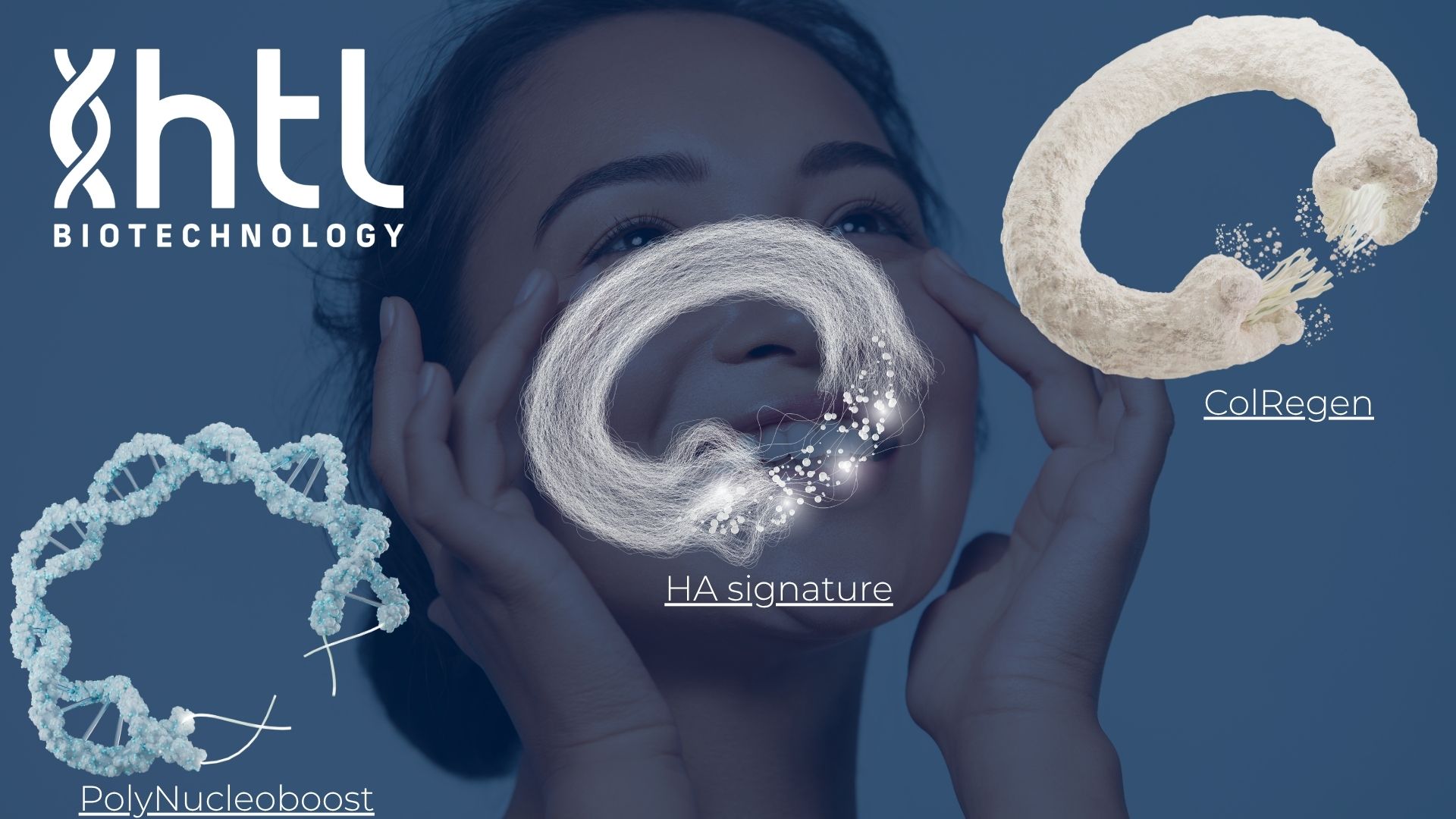
Skin quality has become one of the main focuses of modern aesthetic medicine. While traditional treatments have often aimed to correct visible signs of ageing, today’s regenerative approaches seek to improve the skin itself by supporting hydration, structure and tissue regeneration.

Hyaluronic acid (HA) has become the dominant biomaterial in injectable soft tissue augmentation, with millions of treatments performed annually worldwide. As a naturally occurring glycosaminoglycan composed of repeating disaccharide units of D-glucuronic acid and N-acetyl-D-glucosamine, native HA possesses exceptional biocompatibility, hygroscopicity, and viscoelastic properties. However, in its unmodified state, HA is rapidly degraded in vivo by endogenous hyaluronidases and reactive oxygen species, with a tissue half-life measured in hours to days. [1,2]
To overcome this limitation and create materials suitable for lasting soft tissue correction, HA must be chemically cross-linked. This process transforms a fluid polysaccharide solution into a structured hydrogel with tuneable mechanical and biological properties. The chemistry of cross-linking is, in many respects, the defining step that determines how a dermal filler will perform in the hands of a clinician and in the tissues of a patient. [2,3]

On January 29, 2026, during IMCAS World Congress in Paris, HTL Biotechnology hosted its first scientific session dedicated to the future of regenerative and aesthetic medicine.
Bringing together experts from industry and clinical practice, the session explored how advanced biopolymers are helping shift aesthetic medicine toward a more regenerative approach, focused on skin quality, tissue repair, and long-term biological function.