
EcoVadis Platinum Level Achieved in 2026
We have renewed our EcoVadis assessment and achieved the Platinum level!


BDDE: The Industry Standard Cross-Linker :
The most widely used cross-linking agent in HA-based dermal fillers is 1,4-butanediol diglycidyl ether (BDDE). BDDE is a bifunctional epoxide: each end of the molecule carries an epoxide ring capable of reacting with nucleophilic hydroxyl groups on the HA polysaccharide chain under alkaline conditions. When both epoxide groups react with hydroxyl groups on adjacent HA chains, the result is an ether bond bridge connecting the two chains. This inter-chain linkage is what transforms a viscous HA solution into a cohesive, three-dimensional hydrogel network. [3,4]
However, not every BDDE molecule achieves this bridging function. During manufacturing, a proportion of BDDE molecules react with only one of their two epoxide groups, leaving the other end either hydrolysed or unreacted. These are referred to as pendant or mono-linked modifications. The distinction between bi-linked (true cross-links) and mono-linked (pendant modifications) is important: only bi-linked BDDE contributes to the structural integrity and elastic behaviour of the gel, while pendant modifications alter the hydrophilicity and swelling characteristics of the network without contributing to mechanical strength. [4,5]
Following cross-linking, residual unreacted BDDE is removed through extensive purification processes. Rigorous control of residual BDDE content is essential for ensuring biocompatibility, as BDDE in its free form is a reactive chemical. Regulatory requirements stipulate that residual BDDE in the final product must be reduced to levels well below toxicological thresholds, a standard achieved through validated manufacturing processes such as those employed at pharmaceutical-grade production facilities. [3,6]
Degree of Modification and Its Clinical Significance :
The extent to which HA chains have been modified by BDDE is quantified as the degree of modification (MoD), expressed as a percentage of the total disaccharide units that carry a BDDE-derived substituent (whether bi-linked or mono-linked). A related but distinct parameter is the degree of cross-linking, which specifically reflects the proportion of bi-linked (bridging) modifications. [4,5]
These parameters directly govern the rheological properties of the resulting hydrogel, which in turn dictate its clinical behaviour. The elastic modulus (G’), also known as the storage modulus, describes the gel’s resistance to deformation and is the primary determinant of its capacity to provide structural support or volumetric projection. A higher degree of cross-linking generally correlates with a higher G’, meaning the gel is stiffer and more resistant to the compressive forces exerted by surrounding tissues. [6,7]
The viscous modulus (G”) describes the energy dissipated when the material flows or is deformed. The ratio of G” to G’, known as the loss tangent (tan delta), indicates whether a material behaves more like an elastic solid (low tan delta) or a viscous fluid (high tan delta). [6,7]
For the clinician, this translates directly to product selection. A filler with high G’ and low tan delta is suited for deep volumisation of the midface, chin, or jawline, where structural projection must resist tissue compression. A filler with lower G’ and higher tan delta integrates more readily into superficial tissues and is better suited for fine lines, lip augmentation, or areas requiring natural movement and softness. Two products may share an identical HA concentration of 20 mg/mL and yet perform entirely differently at the bedside, because their cross-linking parameters produce fundamentally different rheological profiles. [6,7,8]
Behaviour In Vivo: Swelling, Integration, and Degradation :
Once injected, a cross-linked HA gel enters a dynamic biological environment. The hygroscopic nature of HA drives the absorption of interstitial water into the gel network, a phenomenon known as hydrophilic swelling. The extent of this swelling is influenced by the cross-linking density: a more tightly cross-linked network restricts chain mobility and limits water uptake, whereas a more loosely cross-linked gel swells more freely. Clinicians observe this as the volumetric increase that occurs in the days following injection, and it is a factor that must be anticipated when determining injection volumes. [1,8]
Degradation of cross-linked HA in vivo proceeds through multiple pathways. Enzymatic hydrolysis by endogenous hyaluronidases (primarily HYAL1 and HYAL2) cleaves the beta-1,4-glycosidic bonds within the HA backbone. However, the cross-linked ether bridges created by BDDE are not substrates for hyaluronidase, meaning that cross-links themselves impede enzymatic access and slow the overall rate of degradation. Higher cross-linking density therefore correlates with longer filler persistence. Free radical-mediated degradation, driven by reactive oxygen species generated during normal tissue metabolism and inflammatory processes, provides a second degradation pathway that operates independently of enzymatic activity. Mechanical stress from facial movement and tissue loading provides a third contributory mechanism. [2,3,9]
The metabolic fate of BDDE cross-links has been characterised through preclinical studies. Following enzymatic breakdown of the HA backbone, BDDE-modified disaccharide fragments are released into the extracellular space. These fragments are further metabolised through physiological pathways, ultimately yielding carbon dioxide and water. No accumulation of BDDE-derived metabolites has been demonstrated in tissues, supporting the established safety profile of BDDE-cross-linked HA fillers. [3]
Conclusion :
Cross-linking chemistry is not merely a manufacturing step; it is the molecular architecture that defines how an HA-based product behaves in clinical practice. The choice of cross-linker, the reaction conditions, and the resulting degree of modification collectively determine the rheological properties, tissue integration characteristics, longevity, and degradation profile of the final product. For the clinician, understanding these principles enables more informed product selection, better prediction of clinical outcomes, and more precise communication with patients about what injectable HA can and cannot achieve.
For manufacturers, excellence in cross-linking chemistry demands rigorous control at every stage, from the purity and molecular weight of the starting HA polymer through to the precision of reaction parameters and the thoroughness of residual cross-linker removal. It is at this intersection of polymer chemistry and clinical medicine that the quality of the raw biopolymer becomes most consequential.
Bibliography :
[1] Fakhari A, Berkland C. Applications and Emerging Trends of Hyaluronic Acid in Tissue Engineering, as a Dermal Filler, and in Osteoarthritis Treatment. Acta Biomaterialia. 2013;9(7):7081-7092. doi:10.1016/j.actbio.2013.03.005
[2] Stern R. Hyaluronan Catabolism: A New Metabolic Pathway. European Journal of Cell Biology. 2004;83(7):317-325. doi:10.1078/0171-9335-00392
[3] De Boulle K, Glogau R, Kono T, Nathan M, Tezel A, Roca-Martinez JX, Paliwal S, Stroumpoulis D. A Review of the Metabolism of 1,4-Butanediol Diglycidyl Ether-Crosslinked Hyaluronic Acid Dermal Fillers. Dermatologic Surgery. 2013;39(12):1758-1766. doi:10.1111/dsu.12301
[4] Kenne L, Gohil S, Nilsson EM, Karlsson A, Ericsson D, Helander Kenne A, Nord LI. Modification and Cross-Linking Parameters in Hyaluronic Acid Hydrogels — Definitions and Analytical Methods. Carbohydrate Polymers. 2013;91(1):410-418. doi:10.1016/j.carbpol.2012.08.066
[5] Yang B, Guo X, Zang H, Liu J. Determination of Modification Degree in BDDE-Modified Hyaluronic Acid Hydrogel by SEC/MS. Carbohydrate Polymers. 2015;131:233-239. doi:10.1016/j.carbpol.2015.05.050
[6] Kablik J, Monheit GD, Yu L, Chang G, Gershkovich J. Comparative Physical Properties of Hyaluronic Acid Dermal Fillers. Dermatologic Surgery. 2009;35(Suppl 1):302-312. doi:10.1111/j.1524-4725.2008.01046.x
[7] Edsman K, Nord LI, Ohrlund A, Larkner H, Kenne AH. Gel Properties of Hyaluronic Acid Dermal Fillers. Dermatologic Surgery. 2012;38(7 Pt 2):1170-1179. doi:10.1111/j.1524-4725.2012.02472.x
[8] La Gatta A, Schiraldi C, Papa A, De Rosa M. Comparative Analysis of Commercial Dermal Fillers Based on Crosslinked Hyaluronan: Physical Characterization and in Vitro Enzymatic Degradation. Polymer Degradation and Stability. 2011;96(4):630-636. doi:10.1016/j.polymdegradstab.2010.12.025
[9] Fallacara A, Baldini E, Manfredini S, Vertuani S. Hyaluronic Acid in the Third Millennium. Polymers. 2018;10(7):701. doi:10.3390/polym10070701


Glaucoma is currently one of the leading causes of irreversible vision loss worldwide. This chronic disease is characterized by progressive damage to the optic nerve, with elevated intraocular pressure being the main modifiable risk factor for disease development and progression. Management relies on the daily administration of pressure-lowering treatments in the form of eye drops to slow disease progression. Although these treatments have demonstrated their efficacy, their long-term use remains challenged by a major issue: treatment adherence, due in part to the physiological limitations of conventional ocular drug administration.
In response to these limitations, the development of new ophthalmic drug delivery technologies aims to improve drug residence time in the eye and ensure a more consistent release of the active pharmaceutical ingredient. Among these innovations, ophthalmic inserts are emerging as a promising technology. [1]
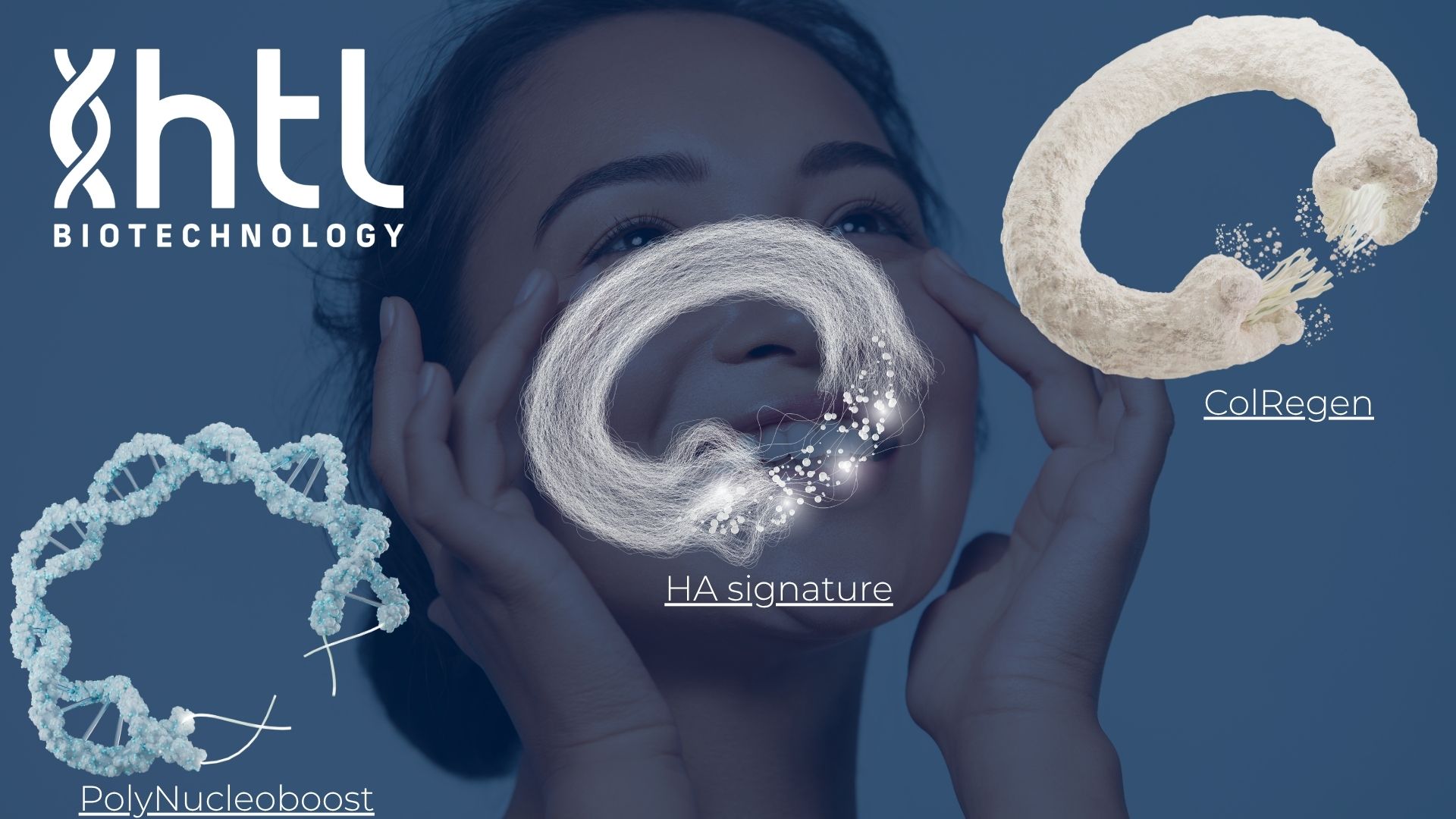
Skin quality has become one of the main focuses of modern aesthetic medicine. While traditional treatments have often aimed to correct visible signs of ageing, today’s regenerative approaches seek to improve the skin itself by supporting hydration, structure and tissue regeneration.

On January 29, 2026, during IMCAS World Congress in Paris, HTL Biotechnology hosted its first scientific session dedicated to the future of regenerative and aesthetic medicine.
Bringing together experts from industry and clinical practice, the session explored how advanced biopolymers are helping shift aesthetic medicine toward a more regenerative approach, focused on skin quality, tissue repair, and long-term biological function.