SILANIZED-HA: FROM SYNTHESIS TO BIOMEDICAL APPLICATIONS

Camille KEÏTA*, Léa MESSAGER, Marianne LAFONT, Pierre WEISS, Anne-Laure GAUDRY


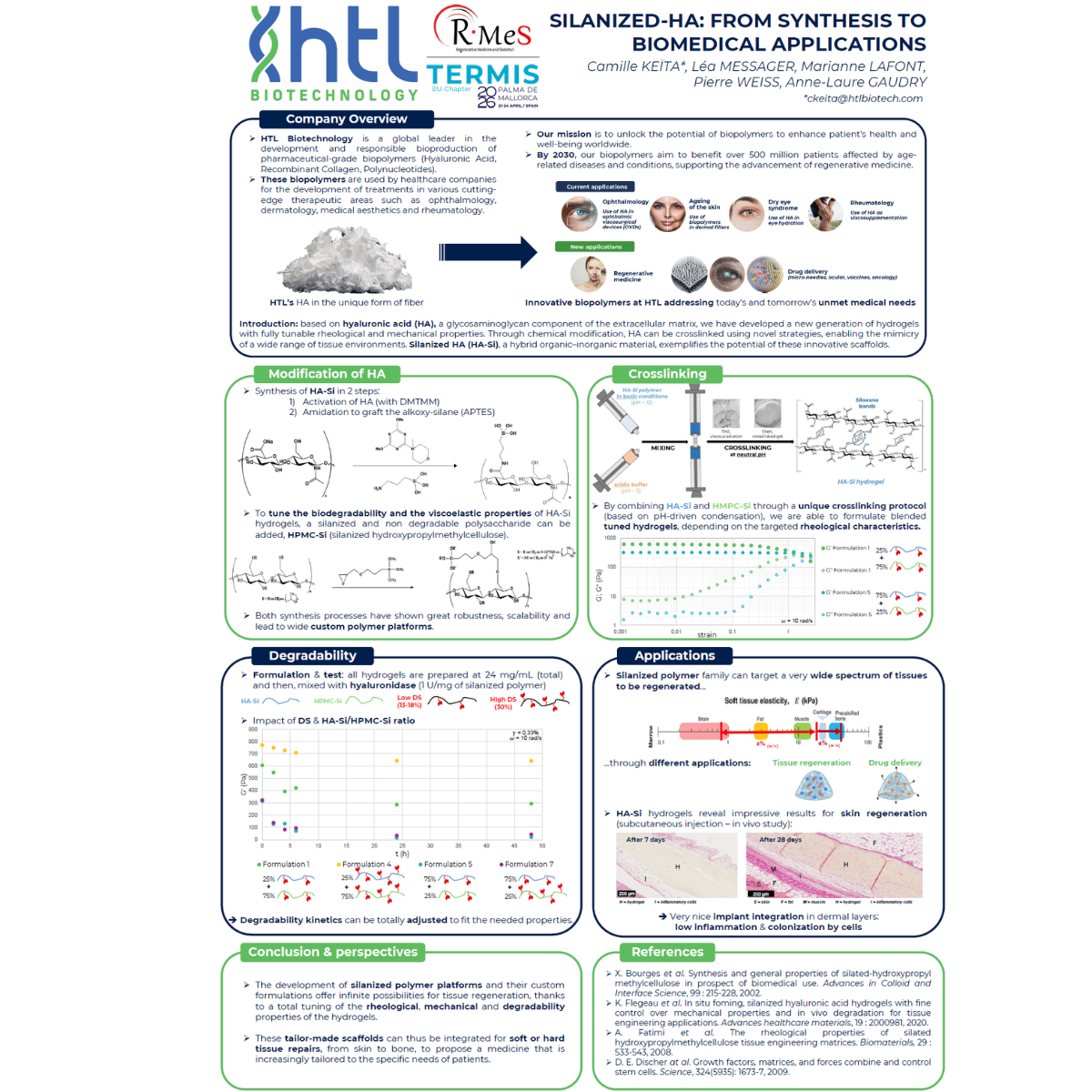
Hyaluronic acid (HA), the most famous glycosaminoglycan of the extracellular matrix, is also an incredible polymer. Thanks to its very wide range of molecular weight, from 103 to 107 Da (Daltons), HA presents versatile viscoelastic properties which make it suitable for various applications in many therapeutic fields such as viscosupplementation, ophthalmic surgery and aesthetic medicine, but also, increasingly, tissue engineering and regenerative medicine.

Despite the strong potential for using native HA in these fields, its viscoelastic properties are not sufficient to provide long-lasting effect (due to its natural enzymatic degradability) and to create versatile scaffolds. To improve and modulate the mechanical properties of the native structure, many crosslinking strategies have been developed over the years to design adjustable scaffolds.

One of them relies on the chemical grafting of silicon alkoxide groups onto the polymer backbone. This modification gives the opportunity to design hybrid organic-inorganic materials, which have already shown very promising assets for tissue engineering. Silanized functions undergo a reversible sol-gel transition in physiological conditions, leveraging the reversible self-condensation of silanol moieties into siloxanes bonds at neutral pH and resulting in the formation of a crosslinked polymeric three-dimensional network. By changing the modified HA molecular weight, the grafting rate and/or the concentration, the properties of the hydrogels are totally tunable, which pave the way to mimic an infinity of natural tissues, from bone to skin.

To tune the swelling and degradability properties of silanized HA, Si grafting has also been applied to Hydroxypropylmethylcellulose (HPMC), a biocompatible but not biodegradable polymer. Thus, combining the two derivatives offers the breakthrough possibility to develop a third generation of hydrogels, with totally adjustable rheological and mechanical features and degradation kinetics relevant for tissue reconstruction.


PDF-HA-Si-Poster

RNA-sequencing-based mechanistic insights support the use of HTL biopolymers as regenerative platforms

Lixin Dai1, Monique De Leeuw1, Gabriele Pitingolo2 , Anne-Laure Gaudry2 . 1HTL Bioinnovation, Nutley (New Jersey) – United States , 2HTL Biotechnology, Javené (Brittany) – France.

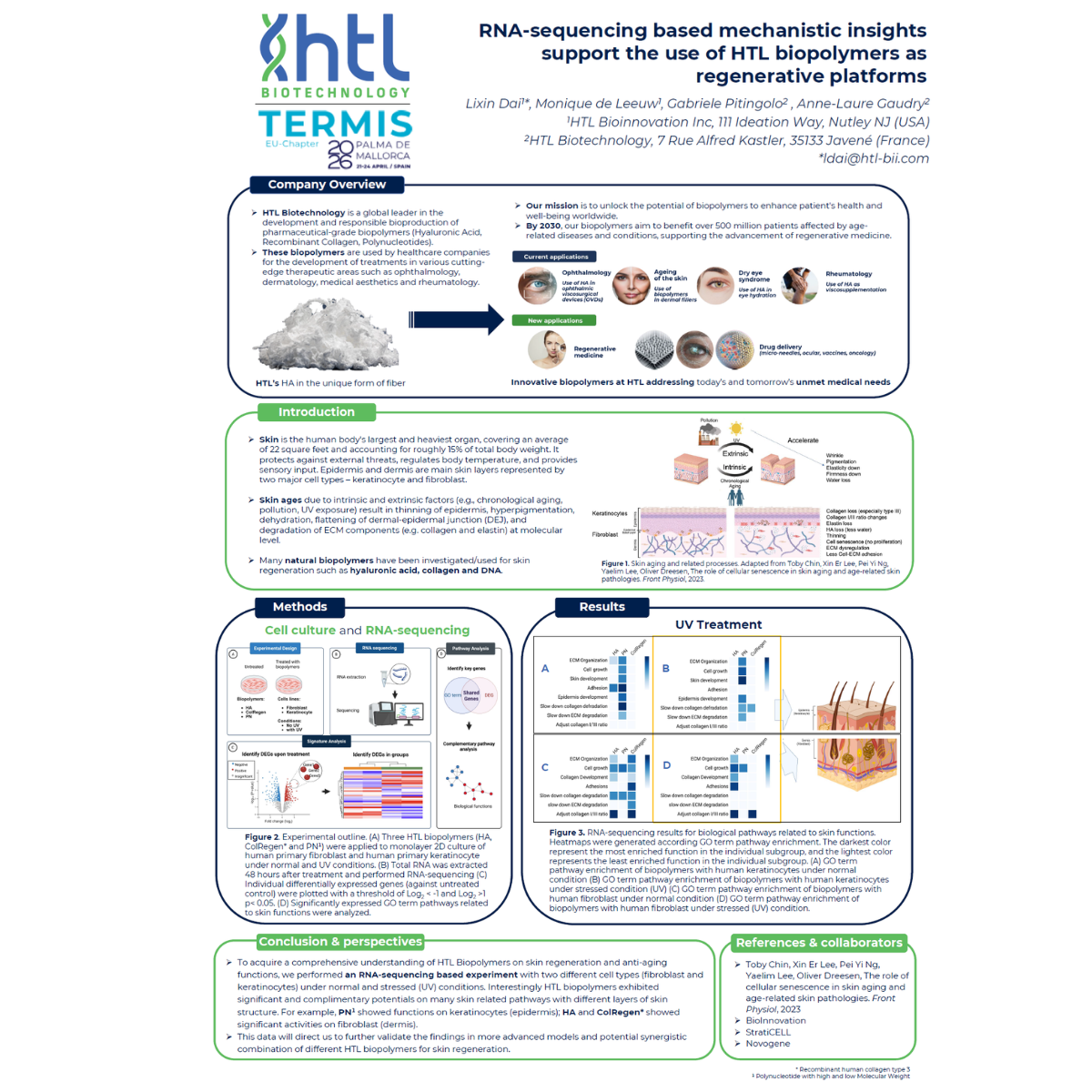
HTL Biotechnology develops and produces several high-quality biopolymers including Hyaluronic acid (HA) and recombinant collagen (rCol) that are two major components of the extracellular matrix (ECM). Another polymer, polynucleotide (PN), is also emerging as a new and safe biomaterial for regenerative medicine applications. Building on its structural proximity to hyaluronic acid, we also formulated heparosan into advanced biomaterial systems, focusing on its enhanced longevity and hyaluronidase resistance as key attributes for next-generation regenerative therapies. To obtain a comprehensive view of these biopolymers regarding their regenerartive functionalities on skin, we conducted genome-wide RNA sequencing analysis after applying the biopolymers on different types of skin cells under various conditions. We looked at the specific effect at gene expression level and pathway enrichment as well. The results helped us confirm existing activities from these biopolymers and provided clues for unexpected functions/pathways. Furthermore, the data allowed us to evaluate all biopolymers unbiasly under the same condition and propose potential synergistic combination with improved or new functions.

RNA-sequencing-based-Poster

Hyaluronic acid and recombinant collagen creates a biomimetic extra-cellular matrix environment with synergistic potential for regenerative medicine

Gabriele Pitingolo, Monique de Leeuw, Lixin Dai, Anne-Laure Gaudry

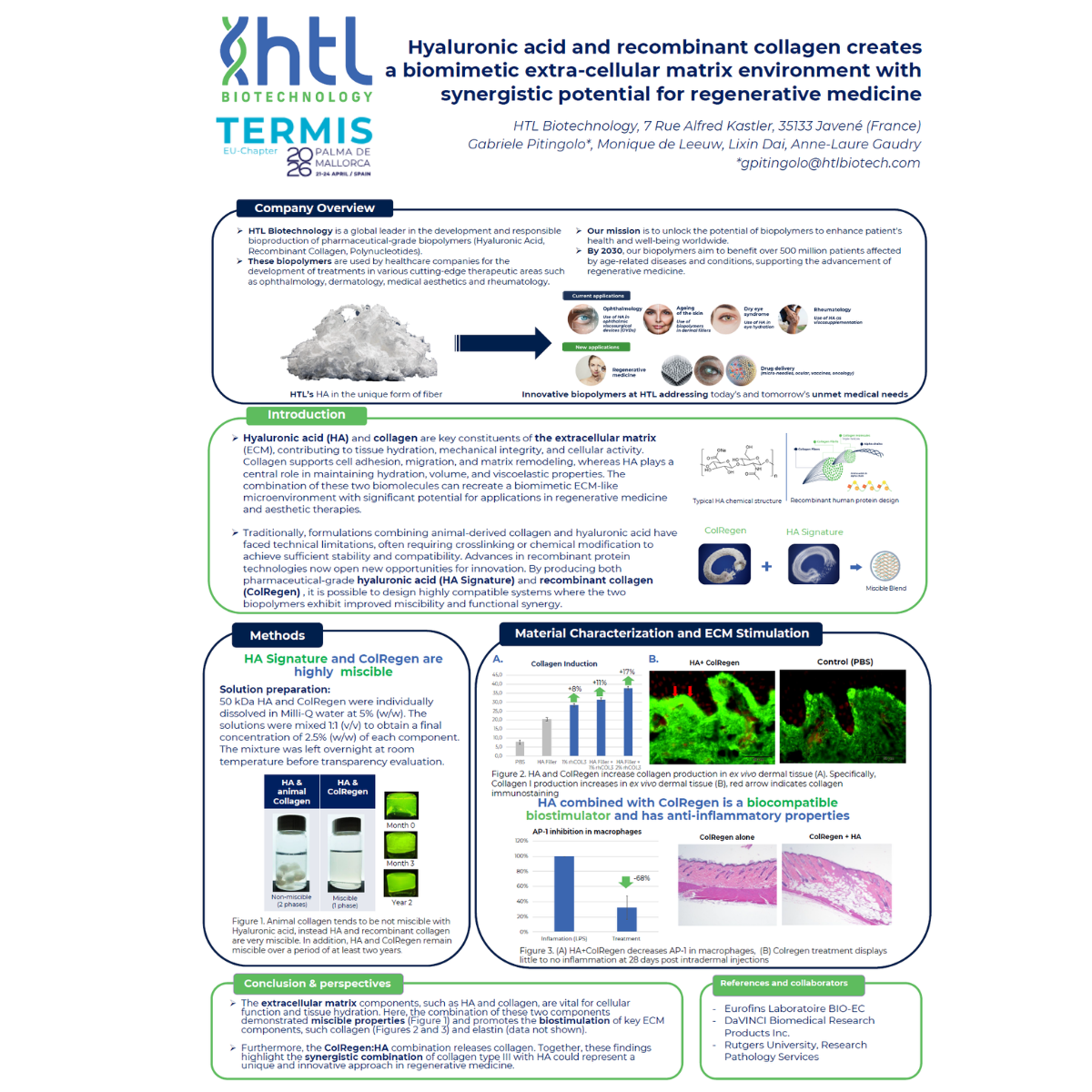
Hyaluronic acid (HA) and collagen are two major constituents of the extracellular matrix (ECM), essential for maintaining tissue hydration, structural integrity, and cellular function [1]. Collagen supports cell adhesion, migration, proliferation, and ECM regeneration, while HA contributes to hydration, volume maintenance, and viscoelastic behavior [2]. Their combination provides a biomimetic microenvironment with synergistic potential across regenerative, aesthetic, and ophthalmologic applications. Traditionally, HA–collagen formulations relied on animal-derived collagen, which posed challenges including batch variability, immunogenicity, and the need for extensive chemical modification or crosslinking. Non-animal-based biopolymers address many of these limitations and further align with ethical and sustainable sourcing practices. Recent advances in recombinant collagen (ColRegen) technology now enable the development of highly defined HA– ColRegen blend with improved formulation flexibility.

In this work, we evaluated HA– ColRegen combination across multiple formulations and conducted physicochemical and biological characterization to assess their suitability for regenerative applications. Key parameters included rheological behavior, biocompatibility, and cellular responses relevant to ECM regeneration. Our findings demonstrate that the HA– ColRegen system offers significant potential as a foundation for next-generation regenerative and minimally invasive therapeutic products.

[1] J Cell Sci . 2010 Dec 1;123(24):4195–4200

[2]. Biomater. Sci., 2025, 13, 5297-5324

HA and recombinant collagen-Poster