
EcoVadis Platinum Level Achieved in 2026
We have renewed our EcoVadis assessment and achieved the Platinum level!

Driven by advances in material science and bioengineering, HA is now at the heart of customized therapeutics, intelligent delivery systems, and biofabricated tissues, positioning it as a strategic biomaterial for tomorrow’s medicine.
HA is evolving from a common active molecule into a customizable therapeutic material. By tuning its molecular weight, modifying its chemical structure, or integrating it into advanced biomaterials, researchers can now precisely adjust HA’s properties to match specific clinical applications.
Whether it’s through thiolation, methacrylation, or PEGylation, HA can be engineered into diverse formats: injectable hydrogels, nanofibrous scaffolds, micelles, nanoparticles, and even stimuli-responsive matrices. These materials offer adaptive solutions in aesthetic medicine, rheumatology, ophthalmology, and beyond—tailoring elasticity, degradation time, and drug-release kinetics to each patient’s needs.
This shift aligns with the broader movement toward precision medicine, where biomaterials are adapted to match not just the disease, but the individual.
One of HA’s most exciting frontiers lies in its transformation into an active drug carrier. Thanks to its natural affinity for CD44 and RHAMM receptors, which are overexpressed in many inflammatory and tumor environments, HA enables targeted delivery with high specificity.
Innovations include:
In ophthalmology, innovative AH-based solutions offer significant potential for the future by improving the retention, penetration, and localization of active ingredients, thereby reducing the frequency of administration and improving patient comfort.
HA’s structural similarity to the native extracellular matrix (ECM) makes it ideal for tissue engineering and regenerative therapies. Its high-water retention, non-immunogenic profile, and enzymatic degradability provide a cell-friendly microenvironment for tissue repair and regeneration.
Recent applications include:
Perhaps most notably, HA is becoming a key component in 3D bioprinting, serving as a bioink that allows researchers to print living structures—skin, vasculature, and even early organoids—mimicking both the architecture and biological functions of native tissue.
The future of hyaluronic acid lies not just in doing more — but in doing better. With its unmatched versatility and adaptability, HA is no longer just a passive component, but a programmable biomaterial that bridges biology and engineering.
From smart wound dressings to targeted anti-cancer therapies and 3D-printed tissues, HA is being redesigned to meet the needs of precision medicine, patient-specific regenerative care, and next-generation drug delivery.
For clinicians, researchers, and biotech innovators, this means that hyaluronic acid is no longer just an ingredient — it’s a strategic material platform for the future of human health.


Glaucoma is currently one of the leading causes of irreversible vision loss worldwide. This chronic disease is characterized by progressive damage to the optic nerve, with elevated intraocular pressure being the main modifiable risk factor for disease development and progression. Management relies on the daily administration of pressure-lowering treatments in the form of eye drops to slow disease progression. Although these treatments have demonstrated their efficacy, their long-term use remains challenged by a major issue: treatment adherence, due in part to the physiological limitations of conventional ocular drug administration.
In response to these limitations, the development of new ophthalmic drug delivery technologies aims to improve drug residence time in the eye and ensure a more consistent release of the active pharmaceutical ingredient. Among these innovations, ophthalmic inserts are emerging as a promising technology. [1]
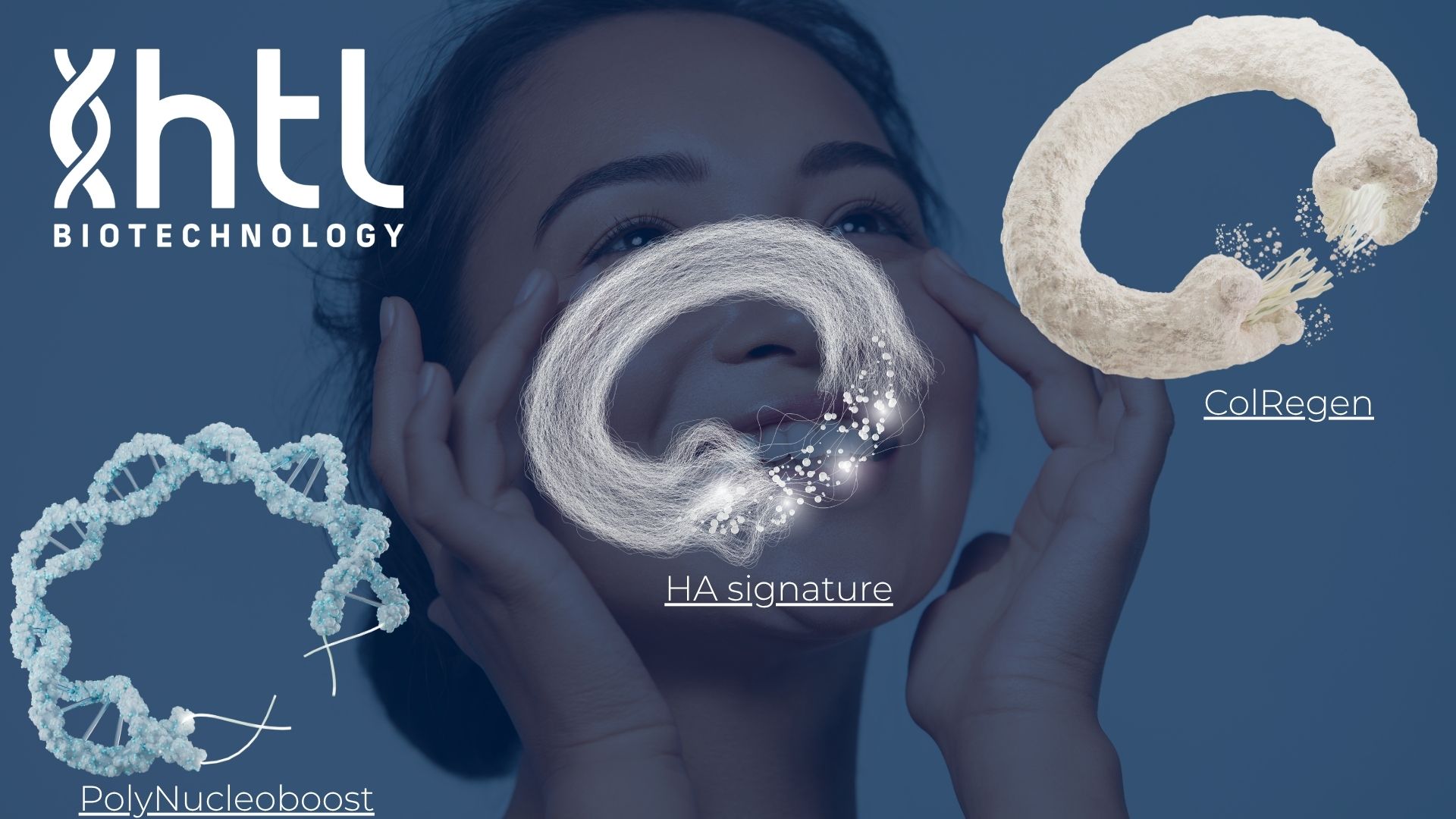
Skin quality has become one of the main focuses of modern aesthetic medicine. While traditional treatments have often aimed to correct visible signs of ageing, today’s regenerative approaches seek to improve the skin itself by supporting hydration, structure and tissue regeneration.
Hyaluronic acid (HA) has become the dominant biomaterial in injectable soft tissue augmentation, with millions of treatments performed annually worldwide. As a naturally occurring glycosaminoglycan composed of repeating disaccharide units of D-glucuronic acid and N-acetyl-D-glucosamine, native HA possesses exceptional biocompatibility, hygroscopicity, and viscoelastic properties. However, in its unmodified state, HA is rapidly degraded in vivo by endogenous hyaluronidases and reactive oxygen species, with a tissue half-life measured in hours to days. [1,2]
To overcome this limitation and create materials suitable for lasting soft tissue correction, HA must be chemically cross-linked. This process transforms a fluid polysaccharide solution into a structured hydrogel with tuneable mechanical and biological properties. The chemistry of cross-linking is, in many respects, the defining step that determines how a dermal filler will perform in the hands of a clinician and in the tissues of a patient. [2,3]