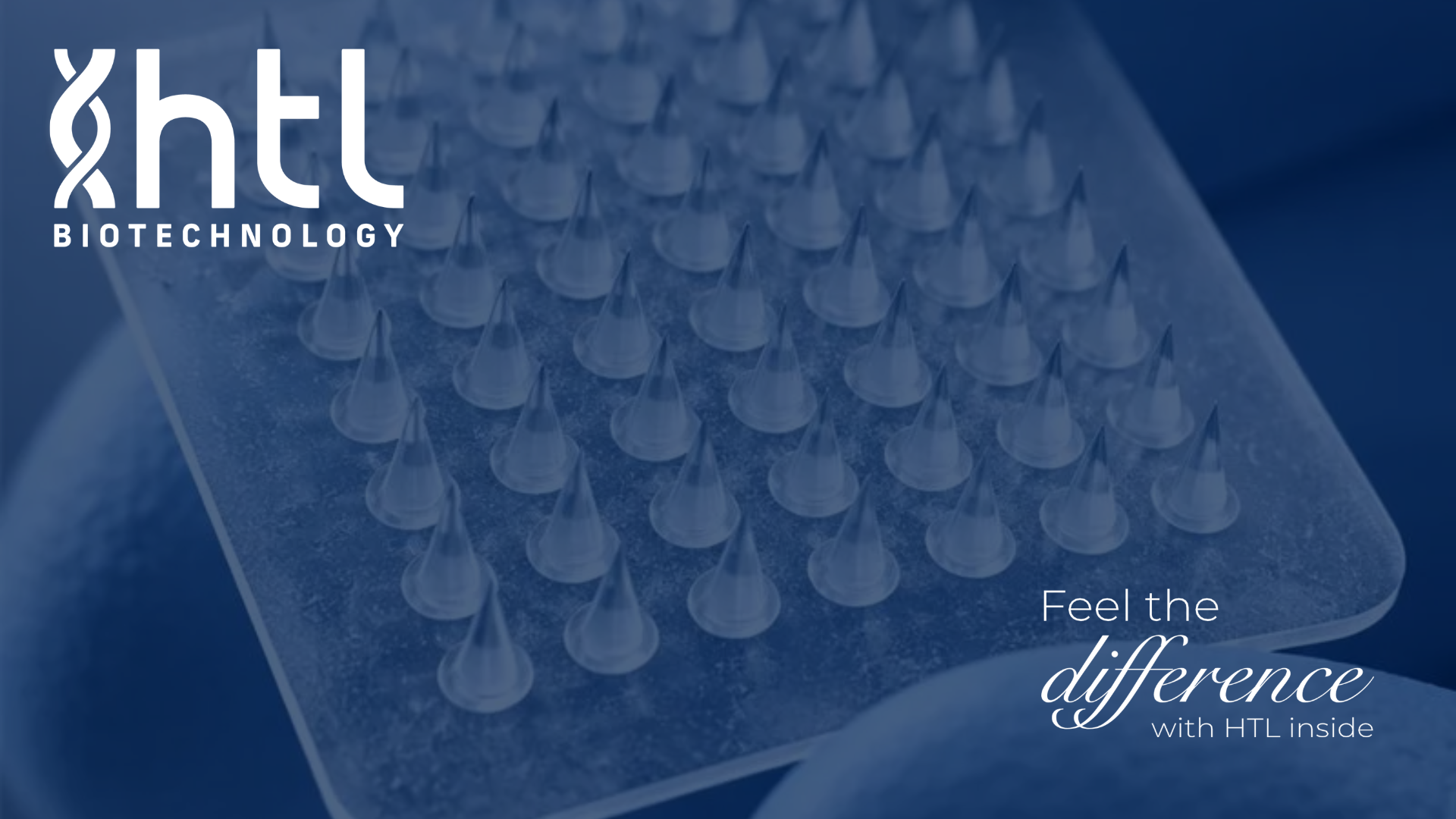
I) What is microneedling?
Microneedling is a technique that consists of creating transient microchannels within the epidermis and dermis using microneedles typically ranging from 25 µm to 2000 µm in length. [1,2]
To better understand its mechanism of action, several key aspects should be considered. The outermost layer of the epidermis, the stratum corneum, has an average thickness of approximately 10–15 µm. [1] This layer forms a highly effective barrier that significantly restricts the penetration of hydrophilic compounds and molecules with high molecular weight. By creating controlled microchannels, microneedles bypass this barrier and facilitate direct access to the dermis. [1,2,3]
Due to their very small diameter, these needles are associated with reduced discomfort compared to conventional needles, while still enabling the delivery of large molecules into the dermal layer. [1]
II) Different types of microneedles
The various therapeutic applications of microneedles are made possible by their diversity in architecture, materials used, and release mechanisms.
Different types of microneedles can be distinguished:
- Solid microneedles (Solid MNs): Made of metal or polymers, they perforate the skin to form microchannels, allowing topical drug diffusion and improved absorption.
- Coated microneedles (Coated MNs): Solid needles coated with a thin film containing the active ingredient, releasing the drug rapidly after insertion.
- Hollow microneedles (Hollow MNs): Acting as micro-syringes, they enable controlled injection of solutions, suitable for administering defined volumes and sensitive biomolecules while minimizing pain.
- Dissolvable microneedles (Dissolvable MNs): Made of water-soluble polymers, they dissolve after insertion, completely releasing the drug in situ.
- Hydrogel-forming microneedles (Hydrogel-forming MNs): Composed of swelling polymers, they absorb interstitial fluid. The swollen polymer enables diffusion of the therapeutic molecule via a concentration gradient. [1,3]
III) Fields of application of microneedles
- Dermatology and Aesthetic Medicine
Microneedling procedure can be used in dermatology as a therapy to stimulate collagen production by stimulating fibroblasts. By creating controlled micro-injuries in the skin, it allows stimulate the body’s natural healing mechanisms, leading to increased collagen and elastin synthesis. [2]
This practice is used for various skin concerns such as acne scars, wrinkles, hyperpigmentation, and stretch marks. [4] One of the major advantages of microneedling is its ability to promote skin renewal while preserving surrounding healthy tissue, resulting in faster healing and reduced downtime compared to other skin treatment methods. [2]
Due to its versatility, microneedling can be performed on almost all areas of the body, although it is commonly applied to the face, neck, and chest.
In aesthetic medicine, microneedling can be used to create controlled microperforations in the skin, followed by the topical application of biostimulatory solutions such as PDRN or peptides. These microchannels facilitate the penetration of active ingredients into deeper skin layers, allowing them to reach target cells and exert their biological effects more effectively than topical application alone.
Applications of microneedles in regenerative medicine offer future perspectives in numerous fields, particularly in skin tissues.
Regarding cutaneous wound healing, studies have shown that microneedle patches significantly accelerate wound closure and promote local angiogenesis. [5] Their association with appropriate therapeutics such as VEGF (vascular endothelial growth factor) has demonstrated effects on neovascularization. [6]
They also improve ECM organization in repaired tissues. They thus offer major perspectives in the treatment of diabetic ulcers, chronic wounds, and burns. [4,6]
- Applications in Immunology
Microneedles may present significant interest in immunology.
In psoriasis, their use facilitates the absorption of corticosteroids, methotrexate, and biologics, reducing systemic effects while increasing local efficacy. Psoriasis is characterized by hyperkeratosis and marked thickening of the stratum corneum, which strongly limits the penetration of conventional topical treatments.
Dissolvable hyaluronic acid-based microneedles have been developed as targeted transdermal delivery systems to treat psoriasis. Microneedle patches have demonstrated significant improvement of skin lesions, associated with reduced local inflammation and epidermal hyperproliferation.
Vaccination is also advancing thanks to the immunological richness of the dermis, which contains a high density of antigen-presenting cells, including dermal dendritic cells and Langerhans cells. Microneedles allow precise targeting of the dermal compartment, minimally invasive administration, and better acceptability compared to conventional hypodermic needles. By facilitating direct access to dermal immunocompetent cells, microneedle systems fit within an approach aimed at optimizing vaccine immunogenicity. [8]
Microneedles are also being studied for oncological applications, such as in melanoma, one of the most aggressive skin cancers. Microneedles enable local administration of chemotherapeutics, immune checkpoint inhibitors, anti-tumor vaccines, and photothermal nanoparticles, ensuring high tumor-site concentrations, reduced systemic toxicity, and stimulation of local immunity. Microneedle patches containing immunostimulatory agents have shown significant tumor volume reduction and activation of cytotoxic T lymphocytes, demonstrating an immunological memory effect. [9]
IV) Hyaluronic acid : A key biomaterial for microneedle development
Hyaluronic acid (HA) is widely regarded as a material of choice for microneedle development, thanks to its excellent biocompatibility, biodegradability, and proven safety. Its physicochemical properties allow the fabrication of dissolvable microneedles capable of delivering a broad range of therapeutic agents, with controlled release profiles. [10]
Once inserted into the skin, hyaluronic acid (HA) dissolves rapidly, enhancing local hydration and facilitating the diffusion of active molecules, thereby improving therapeutic efficacy. After reaching the dermis, HA retains water within the extracellular matrix, promoting tissue hydration and structural expansion. Through interactions with cellular receptors such as CD44, it stimulates fibroblast proliferation and migration while supporting the synthesis of collagen and elastin. In addition, HA contributes to the modulation of the inflammatory response triggered by micro-lesions, creating a microenvironment favorable to tissue regeneration and wound healing. [11]
Conclusion
In conclusion, microneedles offer promising prospects for transdermal and regenerative medicine thanks to their ability to deliver targeted treatments, modulate the local immune system, and improve bioavailability. They are minimally invasive and adaptable to various tissues, while reducing side effects. Their potential for innovation remains vast. The combination with hyaluronic acid, thanks to its biocompatibility and biodegradability, is emerging as a material of the future, placing innovation at the service of safer, more personalized, and patient-centered medicine.
Bibliography :
[1] Shang Lyu a,c, Zhifei Dong a,b, Xiaoxiao Xu a,b, Ho-Pan Bei a, Ho-Yin Yuen a, Chung-Wai James Cheung a, Man-Sang Wong a,***, Yong He c,**, Xin Zhao a, Going below and beyond the surface: Microneedle structure, materials, drugs, fabrication, and applications for wound healing and tissue regeneration
[2] Sharwari Jaiswal , Sugat Jawade, Microneedling in Dermatology: A Comprehensive Review of Applications, Techniques, and Outcomes
[3] Muhammad Bilal, Shahid Mehmood, Ali Raza,4Uzma Hayat, Tahir Rasheed, and Hafiz M.N. Iqbal, Microneedles in Smart Drug Delivery
[4] Yanhua Han, Xiaoyu Qin, Weisen Lin, Chen Wang, Xuanying Yin, Jiaxin Wu, Yang Chen, Xiaojia Chen, Tongkai Chen, Microneedle‑Based Approaches for Skin Disease Treatment
[5] Vera Vera, I Gusti Ayu Agung Praharsini, Efficacy of microneedling with PDRN salmon 3% to reducefacial hyperpigmentation: Skin hyperpigmentation index(SHI) analysis
[6] Yixin Zhang, Yanteng Xu, Huimin Kong, Jiabin Zhang, Hon Fai Chan, JiasiWang, Dan Shao, Yu Tao, Mingqiang Li, Microneedle system for tissue engineering and regenerative medicine
[7] Ting Wang, Die Li, Haojie Bi, Yi Liu, Xuan Xu, Hanying Wang, Qianwei Jin, Shaochun Chen, Lechun Lyu & Jingpei Shi, A bilayered microneedle patch loaded with methotrexate and dexamethasone for transdermal treatment of psoriasis
[8] Maria R. Romano a, Luigi Panza b, Roberto Adamo a, Francesco Berti a, Derek T. O’Hagan c, Simona Gallorini a, Barbara C. Baudner a, Optimizing adjuvants for intradermal delivery of MenC glycoconjugate vaccine
[9] Lanqi Zhu, Guanlin Qiao, Huiyang Gao, Aowei Jiang, Linan Zhang and Xiaobing Wang, Enhancing melanoma therapy with hydrogel microneedles
[10] Jagoda Chudzi nska , AgataWawrzy nczak and Agnieszka Feliczak-Guzik, Microneedles Based on a Biodegradable Polymer—Hyaluronic Acid
[11] Natalia Y Yevdokimova, Sergey E Podpryatov Hyaluronic acid production and CD44 expression in cultured dermal fibroblasts of patients with non-insulin-dependent diabetes mellitus with and without chronic ulcers on the lower extremity