
EcoVadis Platinum Level Achieved in 2026
We have renewed our EcoVadis assessment and achieved the Platinum level!

A Brief History of Hyaluronic Acid
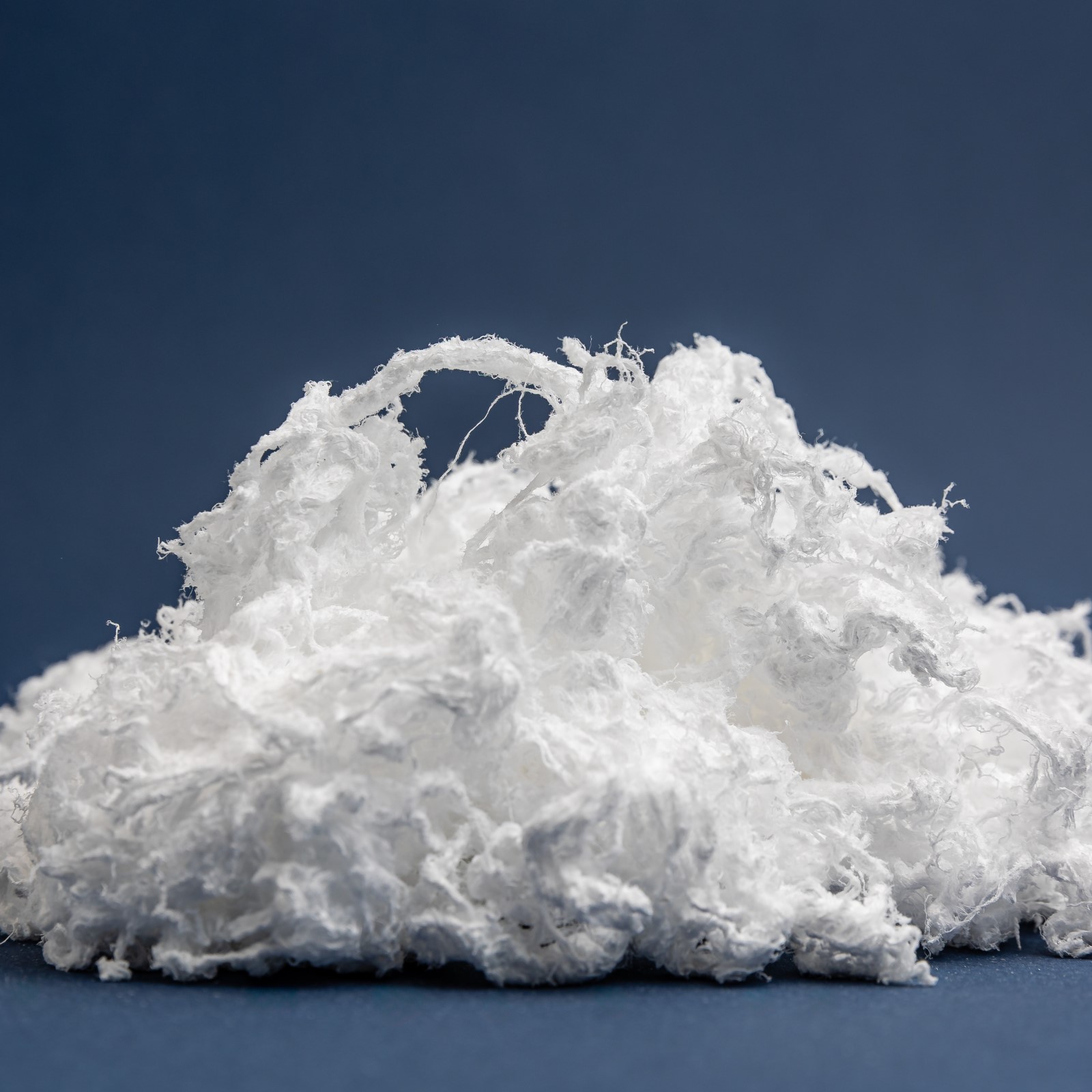
Hyaluronic acid was first discovered in 1934 by Karl Meyer and John Palmer, who identified it as a key component of the vitreous humor in the eye. Initially extracted from animal sources, HA gained medical significance due to its unique ability to retain water and provide structural support to tissues. Over the years, scientific advancements led to the production of HA via bacterial fermentation, offering a purer and safer alternative for medical use.
The Structure and Function of Hyaluronic Acid
HA is a naturally occurring polysaccharide belonging to the glycosaminoglycan family. It is composed of repeating disaccharide units of D-glucuronic acid and N-acetyl-D-glucosamine. This simple yet powerful structure enables HA to attract and retain large amounts of water, contributing to tissue hydration and elasticity.
Physiologically, HA plays a crucial role in various bodily functions, including:
Medical Applications of Hyaluronic Acid
Thanks to its biocompatibility and remarkable hydrophilic properties, HA has been widely adopted in medicine. Key applications include:
HA-based dermal fillers are commonly used in aesthetic procedures to restore volume, reduce wrinkles, and enhance facial contours. Its ability to naturally integrate with tissues makes it a preferred choice for non-invasive aesthetic treatments.
HA is used in eye surgery, particularly in cataract procedures, where it acts as a viscoelastic agent to protect delicate eye tissues. It is also a key ingredient in artificial tears and eye drops for treating dry eye syndrome.
Intra-articular HA injections are widely used to manage osteoarthritis, providing lubrication and cushioning to affected joints, reducing pain, and improving mobility.
HA-based hydrogels and scaffolds are increasingly used in tissue engineering and wound care, facilitating cell growth and accelerating the healing process.
HA’s ability to bind to specific cell receptors has opened new possibilities in targeted drug delivery, improving the efficacy and bioavailability of therapeutics. Particularly interesting developments could be seen in oncology, for example
Conclusion
From its discovery nearly a century ago to its diverse applications in modern medicine, hyaluronic acid continues to be an essential biomolecule in healthcare. As research advances, new possibilities for HA in regenerative medicine, drug delivery, and bioengineering are emerging, paving the way for innovative treatments that enhance patient well-being.
HTL Biotechnology remains committed to pioneering new frontiers in HA research and production, ensuring the highest quality biopolymers for the medical and pharmaceutical industries.

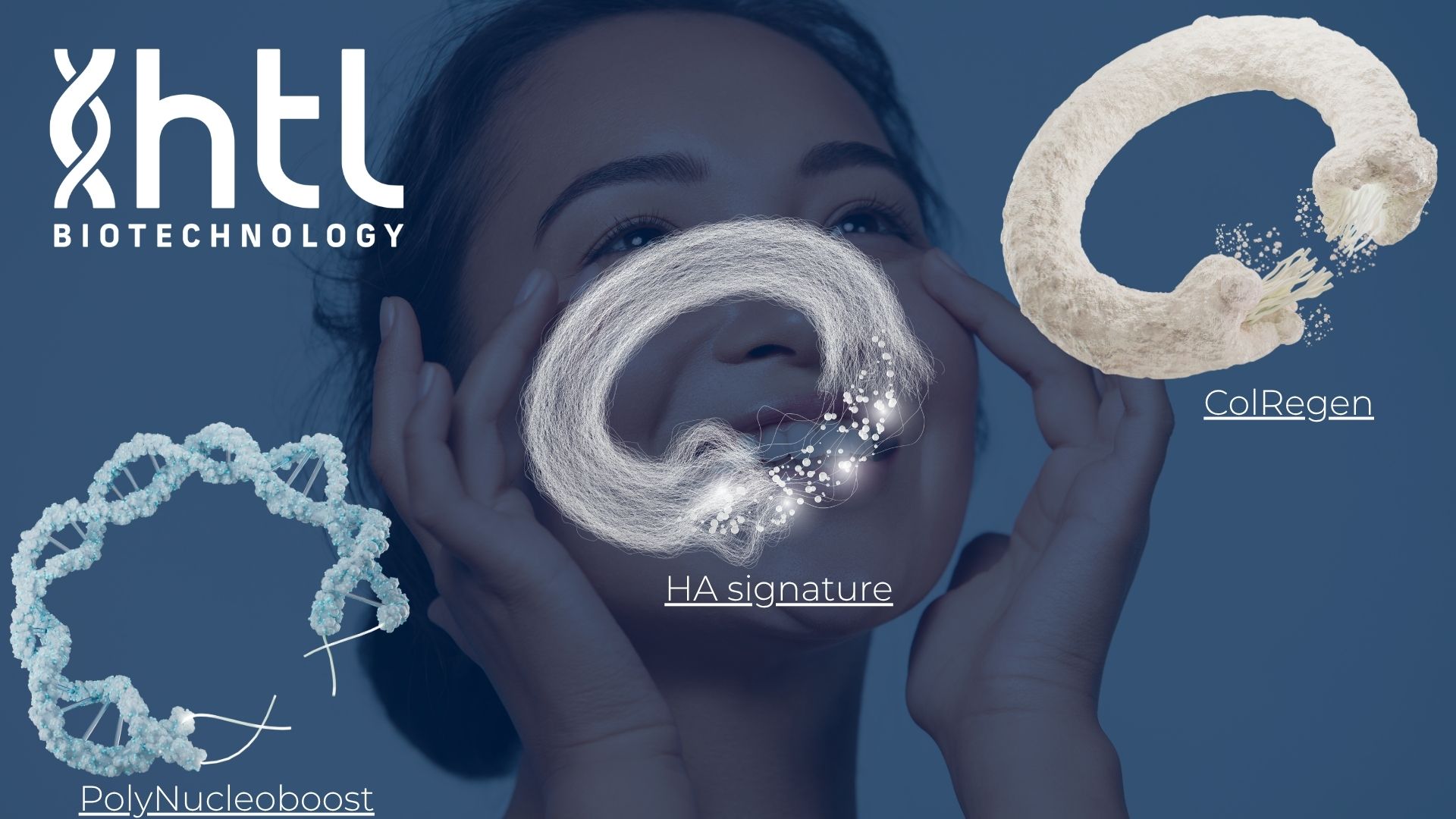
Skin quality has become one of the main focuses of modern aesthetic medicine. While traditional treatments have often aimed to correct visible signs of ageing, today’s regenerative approaches seek to improve the skin itself by supporting hydration, structure and tissue regeneration.

Hyaluronic acid (HA) has become the dominant biomaterial in injectable soft tissue augmentation, with millions of treatments performed annually worldwide. As a naturally occurring glycosaminoglycan composed of repeating disaccharide units of D-glucuronic acid and N-acetyl-D-glucosamine, native HA possesses exceptional biocompatibility, hygroscopicity, and viscoelastic properties. However, in its unmodified state, HA is rapidly degraded in vivo by endogenous hyaluronidases and reactive oxygen species, with a tissue half-life measured in hours to days. [1,2]
To overcome this limitation and create materials suitable for lasting soft tissue correction, HA must be chemically cross-linked. This process transforms a fluid polysaccharide solution into a structured hydrogel with tuneable mechanical and biological properties. The chemistry of cross-linking is, in many respects, the defining step that determines how a dermal filler will perform in the hands of a clinician and in the tissues of a patient. [2,3]

On January 29, 2026, during IMCAS World Congress in Paris, HTL Biotechnology hosted its first scientific session dedicated to the future of regenerative and aesthetic medicine.
Bringing together experts from industry and clinical practice, the session explored how advanced biopolymers are helping shift aesthetic medicine toward a more regenerative approach, focused on skin quality, tissue repair, and long-term biological function.