
EcoVadis Platinum Level Achieved in 2026
We have renewed our EcoVadis assessment and achieved the Platinum level!


Introduction
Cataract is one of the leading causes of visual impairment worldwide and represents a major public health issue, particularly in aging populations. The condition is characterized by a progressive opacification of the crystalline lens, which reduces the transmission of light to the retina and gradually impairs visual acuity. Cataract formation is associated with several biochemical and structural changes in lens proteins, including oxidative stress, non-enzymatic glycation reactions, and aggregation of crystallin proteins, all of which contribute to the loss of lens transparency.
The only currently effective treatment for cataract is surgical removal of the opacified lens followed by the implantation of an artificial intraocular lens. Modern cataract surgery relies heavily on the use of ophthalmic viscosurgical devices (OVDs), which are viscoelastic biomaterials used during intraocular procedures to maintain ocular structures and protect delicate tissues. Among the polymers used in these devices, hyaluronic acid plays a central role because of its unique viscoelastic, lubricating, and biocompatible properties. Understanding the role of OVDs, their composition, and their production is therefore essential for appreciating their contribution to the success and safety of cataract surgery.
Cataract Pathophysiology and Surgical Treatment
The crystalline lens is a transparent structure located behind the iris that focuses light onto the retina. Its transparency depends on the highly ordered arrangement of crystallin proteins and the maintenance of a stable intracellular environment. During aging or under pathological conditions, biochemical processes alter this organization. Oxidative stress damages proteins and lipids within the lens fibers, while glycation reactions lead to structural modifications of crystallins. These processes promote protein aggregation and the formation of light-scattering complexes, ultimately resulting in lens opacification. [1-4]
The standard treatment for cataract is surgical extraction of the opaque lens. The most widely used technique today is phacoemulsification, a minimally invasive procedure performed through a small corneal incision. During this surgery, the anterior chamber of the eye is first filled with a viscoelastic solution to stabilize intraocular structures. A circular opening of the anterior capsule of the lens, known as capsulorhexis, is then performed to access the lens nucleus. Ultrasound energy is subsequently applied through a specialized probe to fragment the opacified lens into small pieces, a process known as phacoemulsification. These fragments are aspirated from the eye, and an artificial intraocular lens is implanted into the capsular bag to restore optical function. At the end of the procedure, the viscoelastic material used during surgery is generally removed by irrigation and aspiration or gradually eliminated through the natural circulation of aqueous humor. Following this procedure, on average 95% of patients regain the expected visual acuity. [1]
Ophthalmic Viscosurgical Devices
Ophthalmic viscosurgical devices are sterile viscoelastic solutions composed of highly biocompatible polymers designed for intraocular use. Their primary function during surgery is to maintain the anterior chamber, protect sensitive ocular tissues such as the corneal endothelium, and facilitate surgical manipulations. Because of their viscoelastic properties, OVDs behave as temporary mechanical barriers capable of absorbing mechanical stress generated by surgical instruments or ultrasound energy. They also act as lubricating agents, reducing friction between instruments and ocular tissues and improving the precision of surgical movements.
The rheological behavior of OVDs is particularly important during cataract surgery. These materials must be viscous enough to maintain intraocular space and stabilize tissues, while remaining sufficiently elastic to absorb mechanical forces. Their viscoelasticity allows them to adapt to different phases of surgery, providing structural support while also protecting cellular structures from damage. [2,3]
Types of Ophthalmic Viscosurgical Devices
OVDs are classified into three main categories based on their rheological properties and molecular composition: [2,3]
Hyaluronic Acid in Cataract Surgery
Hyaluronic acid is one of the most important polymers used in ophthalmic viscosurgical devices. The remarkable physicochemical properties of hyaluronic acid make it particularly suitable for ophthalmic applications. Its high molecular weight and hydrophilic nature allow it to retain large amounts of water, forming highly viscous solutions even at relatively low concentrations. This property contributes to the viscoelastic behavior required for OVDs. In addition, hyaluronic acid exhibits excellent biocompatibility and very low immunogenicity, minimizing the risk of inflammatory reactions when introduced into the eye.
Conclusion
OVDs have become essential tools in modern cataract surgery, contributing to the maintenance of the anterior chamber, protection of ocular tissues, and overall surgical efficiency. Hyaluronic acid plays a central role in these devices due to its viscoelastic properties, high water retention capacity, and excellent biocompatibility. The development of OVDs with diverse rheological profiles now allows surgeons to better adapt materials to each step of the procedure, improving both safety and outcomes. [1–4]
At HTL Biotechnology, we are fully committed to supporting our partners with premium hyaluronic acid solutions for cataract surgery innovations.
Feel the difference with HTL Inside.
To find out more about our premium Hyaluronic Acid, click here.
References
[1] 1. Michael R, Bron AJ. The ageing lens and cataract: a model of normal and pathological ageing. Philos Trans R Soc Lond B Biol Sci. 2011;366(1568):1278-1292.
DOI: 10.1098/rstb.2010.0300
[2] Arshinoff SA. Dispersive-cohesive viscoelastic soft shell technique. J Cataract Refract Surg. 1999;25(2):167-173.
DOI: 10.1016/S0886-3350(99)80121-7
[3] Malvankar-Mehta MS, Fu A, Subramanian Y, Hutnik C. Impact of Ophthalmic Viscosurgical Devices in Cataract Surgery. J Ophthalmol. 2020;2020:7801093.
DOI: 10.1155/2020/7801093
[4] American Academy of Ophthalmology (AAO). What Is Cataract Surgery?
https://www.aao.org/eye-health/diseases/what-is-cataract-surgery

Glaucoma is currently one of the leading causes of irreversible vision loss worldwide. This chronic disease is characterized by progressive damage to the optic nerve, with elevated intraocular pressure being the main modifiable risk factor for disease development and progression. Management relies on the daily administration of pressure-lowering treatments in the form of eye drops to slow disease progression. Although these treatments have demonstrated their efficacy, their long-term use remains challenged by a major issue: treatment adherence, due in part to the physiological limitations of conventional ocular drug administration.
In response to these limitations, the development of new ophthalmic drug delivery technologies aims to improve drug residence time in the eye and ensure a more consistent release of the active pharmaceutical ingredient. Among these innovations, ophthalmic inserts are emerging as a promising technology. [1]
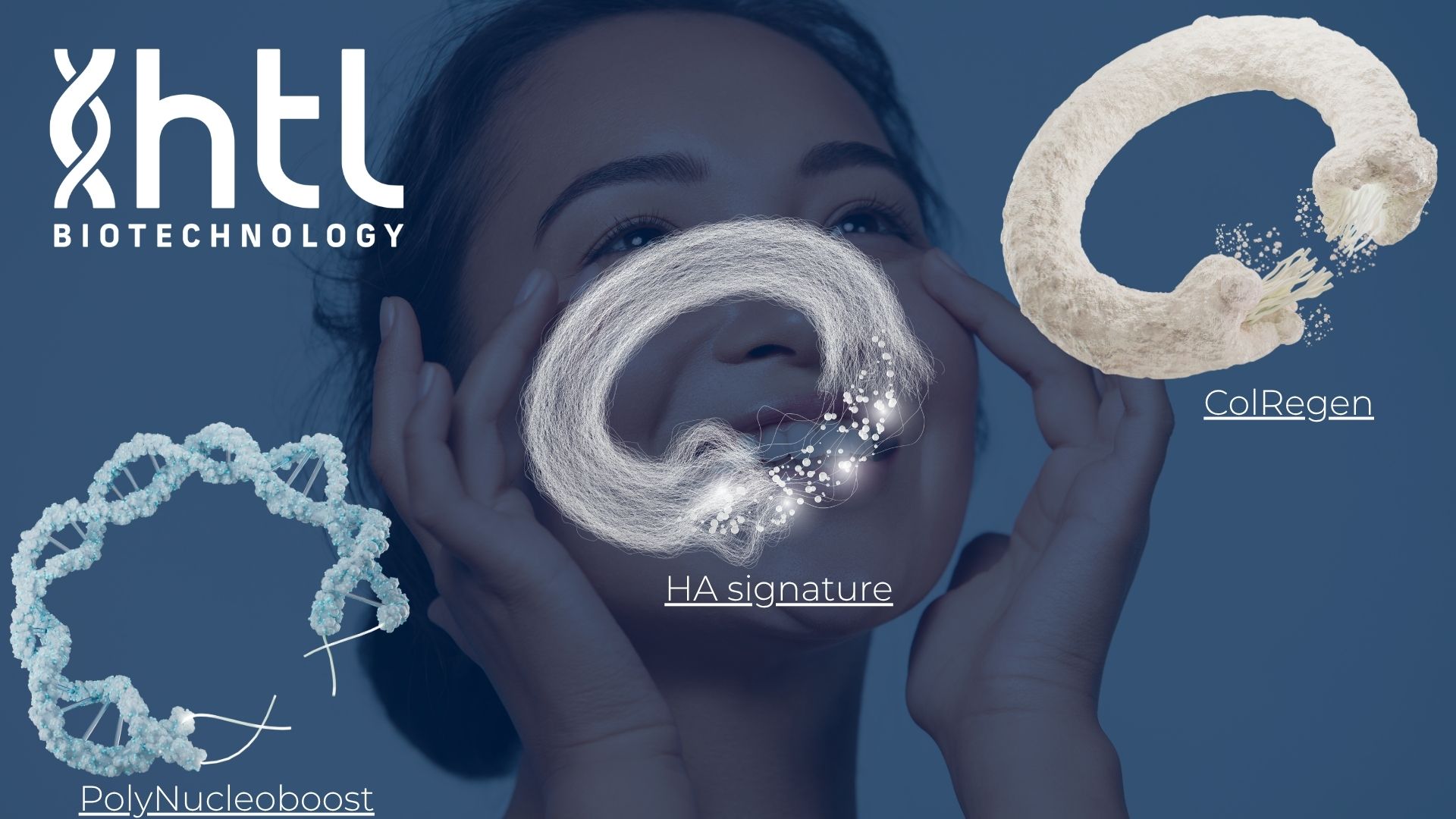
Skin quality has become one of the main focuses of modern aesthetic medicine. While traditional treatments have often aimed to correct visible signs of ageing, today’s regenerative approaches seek to improve the skin itself by supporting hydration, structure and tissue regeneration.
Hyaluronic acid (HA) has become the dominant biomaterial in injectable soft tissue augmentation, with millions of treatments performed annually worldwide. As a naturally occurring glycosaminoglycan composed of repeating disaccharide units of D-glucuronic acid and N-acetyl-D-glucosamine, native HA possesses exceptional biocompatibility, hygroscopicity, and viscoelastic properties. However, in its unmodified state, HA is rapidly degraded in vivo by endogenous hyaluronidases and reactive oxygen species, with a tissue half-life measured in hours to days. [1,2]
To overcome this limitation and create materials suitable for lasting soft tissue correction, HA must be chemically cross-linked. This process transforms a fluid polysaccharide solution into a structured hydrogel with tuneable mechanical and biological properties. The chemistry of cross-linking is, in many respects, the defining step that determines how a dermal filler will perform in the hands of a clinician and in the tissues of a patient. [2,3]