
EcoVadis Platinum Level Achieved in 2026
We have renewed our EcoVadis assessment and achieved the Platinum level!

Among the most widely established applications of HA is viscosupplementation or intra-articular injections in osteoarthritis treatment for the knees. By delivering HA precisely into the synovial fluid of affected joints, this treatment helps reduce pain, restore lubrication and cushioning, and improve mobility.1,2
HA is also believed to have anti-inflammatory properties by modulating the activity of cytokines and reducing the degradation of cartilage.3,4,5,6 These properties alleviates symptoms while slowing the progression of the disease.7
Beyond providing symptomatic relief leading to better quality of life, receiving intra-articular HA injections also helps in preserving joint cartilage.8
Patient testimonials and outcome studies have reinforced the role of HA in osteoarthritis and rheumatology, with patients reporting reduction in pain and improved joint function.4,9 Comparative studies have also shown that repeated intra-articular HA treatments could deliver sustained benefits with respect to pain relief and functional benefits. These outcomes highlight HA’s role as a reliable, long-term strategy in osteoarthritis management.10
In the broader field of rheumatology, HA’s anti-inflammatory and immunomodulatory properties are being explored in conditions attributed to joint pain and inflammation.
While HA’s benefits in osteoarthritis are well established, its potential applications are expanding into the broader field of rheumatology, for example in ankle osteoarthritis.
A randomized, double-blind study on efficacy of HA in ankle osteoarthritis showed encouraging results, suggesting that HA can improve pain and function across multiple joints, not just the knee. This underscores HA’s potential as a versatile therapy for various inflammatory and degenerative joint conditions.11
Recent developments are propelling HA based therapies into an exciting new phase, that is, combining HA with other therapeutic agents, such as corticosteroids or other anti-inflammatory compounds, to enhance its efficacy.5
Pursuit of improved efficacy and patient compliance have resulted in the development of novel HA formulations.5,12 This includes combining HA with agents targeting specific inflammatory pathways that address symptoms and causes of joint diseases, as well as sustained release HA formulations.5,12,16 These next generation formulations not only improve patient convenience but also ensure a more consistent therapeutic outcome.
Novel delivery systems are also being developed with the aim of enhancing bioavailability, duration of action, and patient experience leading to the integration of HA in the nanotechnology and target delivery field.5,13,14,15 Engineered nanoparticles can deliver HA directly to affected tissues, maximizing their therapeutic concentration while minimizing systemic exposure or potential side-effects.
The evolution of hyaluronic acid from a naturally occurring biopolymer to an important therapy option for joint disease highlights its transformative impact in biomedical science. As innovation drives new delivery systems and broader applications, HA continues to stand at the forefront of osteoarthritis and rheumatology treatment as well as across other medical fields, from ophthalmology to regenerative medicine, improving lives worldwide.


Glaucoma is currently one of the leading causes of irreversible vision loss worldwide. This chronic disease is characterized by progressive damage to the optic nerve, with elevated intraocular pressure being the main modifiable risk factor for disease development and progression. Management relies on the daily administration of pressure-lowering treatments in the form of eye drops to slow disease progression. Although these treatments have demonstrated their efficacy, their long-term use remains challenged by a major issue: treatment adherence, due in part to the physiological limitations of conventional ocular drug administration.
In response to these limitations, the development of new ophthalmic drug delivery technologies aims to improve drug residence time in the eye and ensure a more consistent release of the active pharmaceutical ingredient. Among these innovations, ophthalmic inserts are emerging as a promising technology. [1]
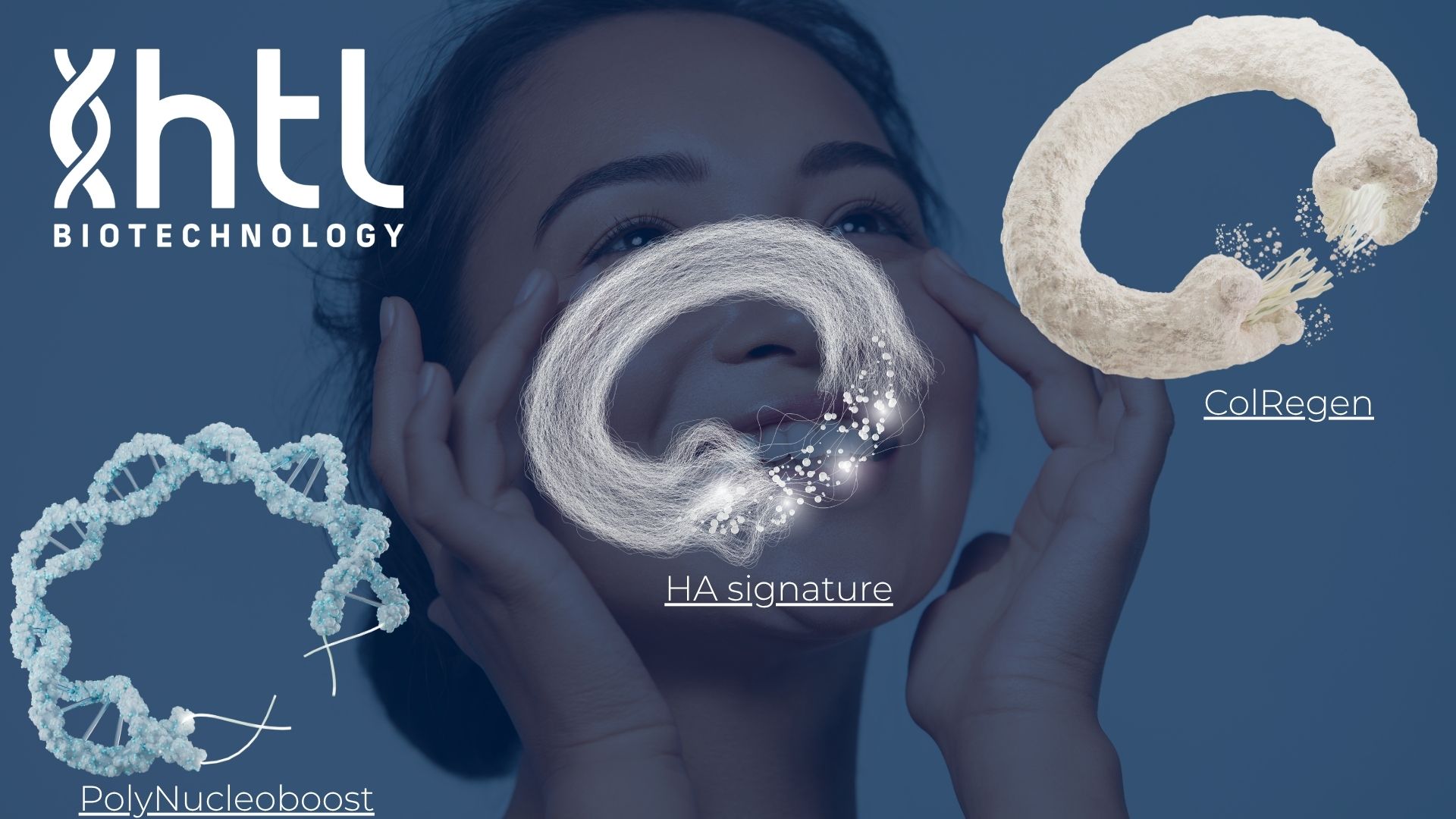
Skin quality has become one of the main focuses of modern aesthetic medicine. While traditional treatments have often aimed to correct visible signs of ageing, today’s regenerative approaches seek to improve the skin itself by supporting hydration, structure and tissue regeneration.

Hyaluronic acid (HA) has become the dominant biomaterial in injectable soft tissue augmentation, with millions of treatments performed annually worldwide. As a naturally occurring glycosaminoglycan composed of repeating disaccharide units of D-glucuronic acid and N-acetyl-D-glucosamine, native HA possesses exceptional biocompatibility, hygroscopicity, and viscoelastic properties. However, in its unmodified state, HA is rapidly degraded in vivo by endogenous hyaluronidases and reactive oxygen species, with a tissue half-life measured in hours to days. [1,2]
To overcome this limitation and create materials suitable for lasting soft tissue correction, HA must be chemically cross-linked. This process transforms a fluid polysaccharide solution into a structured hydrogel with tuneable mechanical and biological properties. The chemistry of cross-linking is, in many respects, the defining step that determines how a dermal filler will perform in the hands of a clinician and in the tissues of a patient. [2,3]