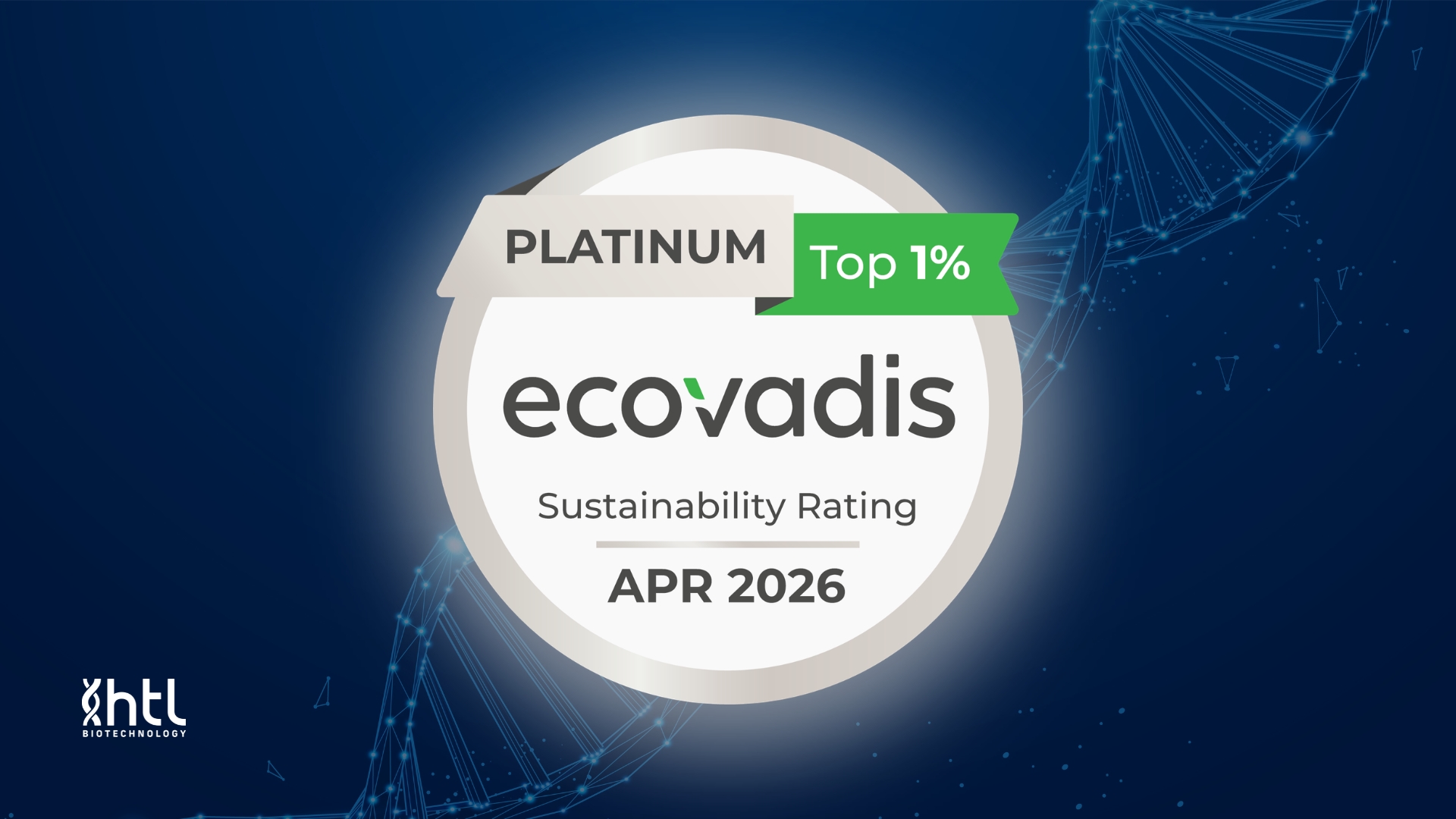
EcoVadis Platinum Level Achieved in 2026
We have renewed our EcoVadis assessment and achieved the Platinum level!

Marie-Armelle Floc’h, Chief of Quality and Regulatory Affairs at HTL Biotechnology, highlights how HTL Biotechnology’s compelling portfolio of pharmaceutical-grade biopolymers is built on uncompromising quality standards; standards that have enabled the company to supply biopolymers for over 30 years without a single batch recall, firmly establishing its reputation for reliability and excellence.
HTL Biotechnology has built its reputation on delivering pharmaceutical grade biopolymers, such as Hyaluronic Acid, Polynucleotides and now Recombinant Collagen, with unmatched purity and consistency. Since its founding in 1992, the company has focused on premium quality positioning. With more than 30 years of expertise, we guarantee pharmaceutical-grade biopolymers of exceptional purity and consistency to our clients.
We have had no batch recalls in 30 years — a record that underlines the rigor and reliability embedded in our processes. This is made possible by our fully integrated GMP manufacturing site in France, where production, quality control, and regulatory expertise operate seamlessly together. In close connection with our global R&D teams, this integration enables us to support our clients throughout their entire product development journey, from early innovation to worldwide commercialization.
Our operations are guided by internationally recognized standards, including ISO 13485 certification, which ensures the quality and safety required by medical device manufacturers worldwide. In addition, our Halal certification provides our customers with a significant advantage in accessing and expanding into markets, where these requirements are essential for commercialization. Beyond certifications, our commitment to supporting global growth is reflected in the Drug Master Files we maintain across five continents, enabling our clients to accelerate product registration and bring innovative therapies to markets across the world more efficiently.
By combining craftsmanship with pharmaceutical rigor, supported by state-of-the-art equipment and advanced bioproduction methods, we ensure that every batch produced not only meets the strictest standards but also delivers the reliability and the consistency needed across the entire healthcare ecosystem.
Regulatory support is part of our core premium services offer. We provide pharmaceutical regulatory support to ensure products meet the necessary compliance standards, so our partners can focus on their growth. Our dedicated regulatory professionals bring global and regional expertise, with a team specifically supporting customers in Asia.
We offer personalized assistance adapted to their products and to the compliance standards of the target market. This includes personalized case-management support for regulatory file submissions with the concerned health authorities to minimize risks of refusal or delay, with the aim of achieving approval quickly and smoothly.
Our offer for regulatory support continues beyond approval. We continuously monitor updates to regulations and provide post-commercialization support to our partners to help them manage any necessary regulatory updates.

Glaucoma is currently one of the leading causes of irreversible vision loss worldwide. This chronic disease is characterized by progressive damage to the optic nerve, with elevated intraocular pressure being the main modifiable risk factor for disease development and progression. Management relies on the daily administration of pressure-lowering treatments in the form of eye drops to slow disease progression. Although these treatments have demonstrated their efficacy, their long-term use remains challenged by a major issue: treatment adherence, due in part to the physiological limitations of conventional ocular drug administration.
In response to these limitations, the development of new ophthalmic drug delivery technologies aims to improve drug residence time in the eye and ensure a more consistent release of the active pharmaceutical ingredient. Among these innovations, ophthalmic inserts are emerging as a promising technology. [1]
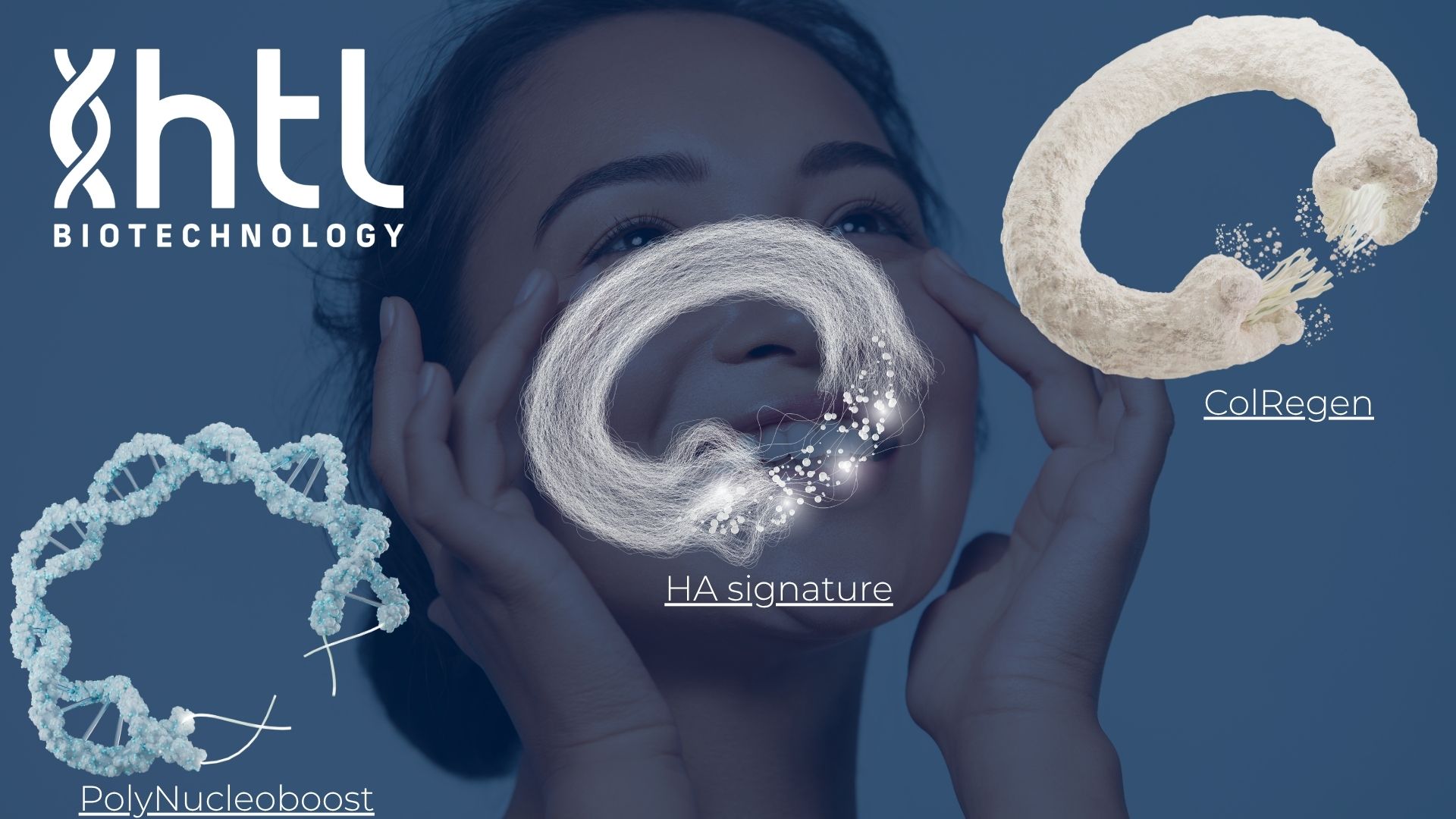
Skin quality has become one of the main focuses of modern aesthetic medicine. While traditional treatments have often aimed to correct visible signs of ageing, today’s regenerative approaches seek to improve the skin itself by supporting hydration, structure and tissue regeneration.
Hyaluronic acid (HA) has become the dominant biomaterial in injectable soft tissue augmentation, with millions of treatments performed annually worldwide. As a naturally occurring glycosaminoglycan composed of repeating disaccharide units of D-glucuronic acid and N-acetyl-D-glucosamine, native HA possesses exceptional biocompatibility, hygroscopicity, and viscoelastic properties. However, in its unmodified state, HA is rapidly degraded in vivo by endogenous hyaluronidases and reactive oxygen species, with a tissue half-life measured in hours to days. [1,2]
To overcome this limitation and create materials suitable for lasting soft tissue correction, HA must be chemically cross-linked. This process transforms a fluid polysaccharide solution into a structured hydrogel with tuneable mechanical and biological properties. The chemistry of cross-linking is, in many respects, the defining step that determines how a dermal filler will perform in the hands of a clinician and in the tissues of a patient. [2,3]